
Should You Price Below Market Value to Spark a Bidding War in San Diego?
San Diego Real Estate Market Chase Penrose March 3, 2026
San Diego Real Estate Market Chase Penrose March 3, 2026
Underpricing works in specific San Diego micro-markets with high demand and low inventory.
It is most effective for entry-level and mid-market homes under $1.5M.
In balanced or slower segments, underpricing can backfire and anchor buyer expectations lower.
The strategy must be paired with a defined offer review date, strong pre-marketing, and controlled showing windows.
Sellers should base pricing decisions on absorption rate, days on market trends, and neighborhood-specific buyer behavior — not national headlines.
In today’s evolving housing environment across San Diego County, sellers are asking a very specific question:
Should I intentionally price my home below market value to create multiple offers and drive the price up?
This strategy has been widely used in neighborhoods like San Diego, Chula Vista, Carlsbad, and El Cajon — but it is not universally effective.
The answer depends entirely on local inventory levels, buyer psychology in your price range, and how quickly comparable homes are absorbing. Pricing strategy in 2026 is far more surgical than it was during the ultra-competitive 2021–2022 market cycle.
Let’s break down when this tactic works — and when it creates unnecessary risk.
When a home is priced below perceived market value, it does three things:
Increases online click-through and showing activity
Expands the buyer pool (more buyers qualify at lower price points)
Creates urgency if inventory is tight
However, this only converts into a bidding war if:
There are at least 3–5 active, qualified buyers competing in that segment
Comparable homes are pending within 14–21 days
Mortgage rate volatility is not suppressing urgency
In many entry-level San Diego neighborhoods, particularly between $750,000 and $1.25M, buyer demand still exceeds supply. In those cases, strategic underpricing can push final sale prices 3–8% above list.
In higher price brackets above $1.8M, especially outside the coastal luxury corridor, buyer pools are thinner. Underpricing in those segments often results in a single offer near asking — not multiple offers well above it.
If active listings in your zip code represent less than two months of inventory, demand pressure supports competitive escalation.
Examples of neighborhoods where this can work:
Clairemont
Serra Mesa
Allied Gardens
Parts of Oceanside
When absorption rates are strong, pricing 3–5% below modeled market value can create competitive tension.
Underpricing works best when the property checks multiple high-demand boxes:
Updated kitchen and baths
Move-in ready condition
Functional floor plan
Desirable school district
ADU potential
Homes that require heavy renovation do not typically benefit from underpricing — investors are analytical and will not emotionally bid beyond their pro forma.
Buyers under $1.5M in San Diego tend to be rate-sensitive and emotionally competitive. If they feel a home is “a deal,” they act quickly.
By contrast, luxury buyers in markets like La Jolla or Del Mar negotiate methodically. They rarely overbid unless the property is truly irreplaceable.
There are three scenarios where this strategy creates risk:
If days on market are trending upward and price reductions are common, buyers interpret underpricing as desperation — not opportunity.
If your home is architecturally distinct, unusually large, or located on a premium lot, pricing below market can anchor expectations lower and leave money on the table.
Underpricing without:
Professional staging
High-end photography
Defined offer deadline
Broker outreach
Pre-market exposure
is simply discounting.
Strategic exposure through platforms like Compass Private Exclusives and pre-MLS positioning can be reviewed here:
https://chasepenrose.com/compass-exclusive
Before choosing an underpricing strategy, analyze:
30-day absorption rate in your zip code
Median days on market for similar homes
Sale-to-list price ratio trends
Number of competing active listings
Percentage of price reductions in your segment
Sellers can review comparable homes currently for sale here:
https://chasepenrose.com/home-search/listings
For a precise valuation based on current San Diego absorption metrics:
https://chasepenrose.com/home-valuation
If the data supports the strategy, execution must be disciplined.
Recommended framework:
Price 3–5% below modeled market value
Launch mid-week
Schedule showings Thursday–Sunday
Set offer review date 5–7 days out
Pre-disclose to reduce contingencies
Create controlled showing windows to build urgency
The goal is not to “discount.” The goal is to manufacture structured competition.
No. It only increases the probability if inventory is tight and buyer demand is strong in your segment.
In most San Diego submarkets, 3–5% below modeled value is sufficient. Pricing 10% below market is unnecessary and risky.
If priced strategically, a single strong offer near modeled value can still represent a successful outcome. The key is pricing within a range that protects downside risk.
Yes — selectively. It is most effective in entry-level and mid-tier neighborhoods with constrained supply.
In San Diego, pricing is not about optimism — it is about positioning.
I analyze hyperlocal absorption rates weekly across neighborhoods from North Park to Carmel Valley. In tight micro-markets, underpricing is a controlled tactic that can drive exceptional outcomes. In balanced segments, it is unnecessary.
The sellers who outperform the market are not those who chase headlines. They are those who align pricing strategy with real-time neighborhood data.
You can review our full seller strategy framework here:
https://chasepenrose.com/sellers-guide
Underpricing can be powerful — but only when supported by data, timing, and disciplined execution.
If you are considering selling and want to evaluate whether this approach makes sense for your specific property, start with a precise valuation and absorption analysis:
https://chasepenrose.com/home-valuation
San Diego is not one market. It is dozens of micro-markets behaving differently at the same time. Your pricing strategy should reflect that reality.
Stay up to date on the latest real estate trends.

Sellers
How to evaluate risk, structure the deal, and maximize your final sale price in today’s evolving market

San Diego County Real Estate
San Diego Real Estate Market
A data-driven 2026 analysis of when underpricing works — and when it costs sellers money.

Home Selling Strategies
What Condo Owners Need to Know About Pricing, SB 326, and Buyer Behavior

Luxury Real Estate
A Clear Analysis of Supply, Luxury Demand, and What Buyers and Sellers Should Expect
Mortgage Rates
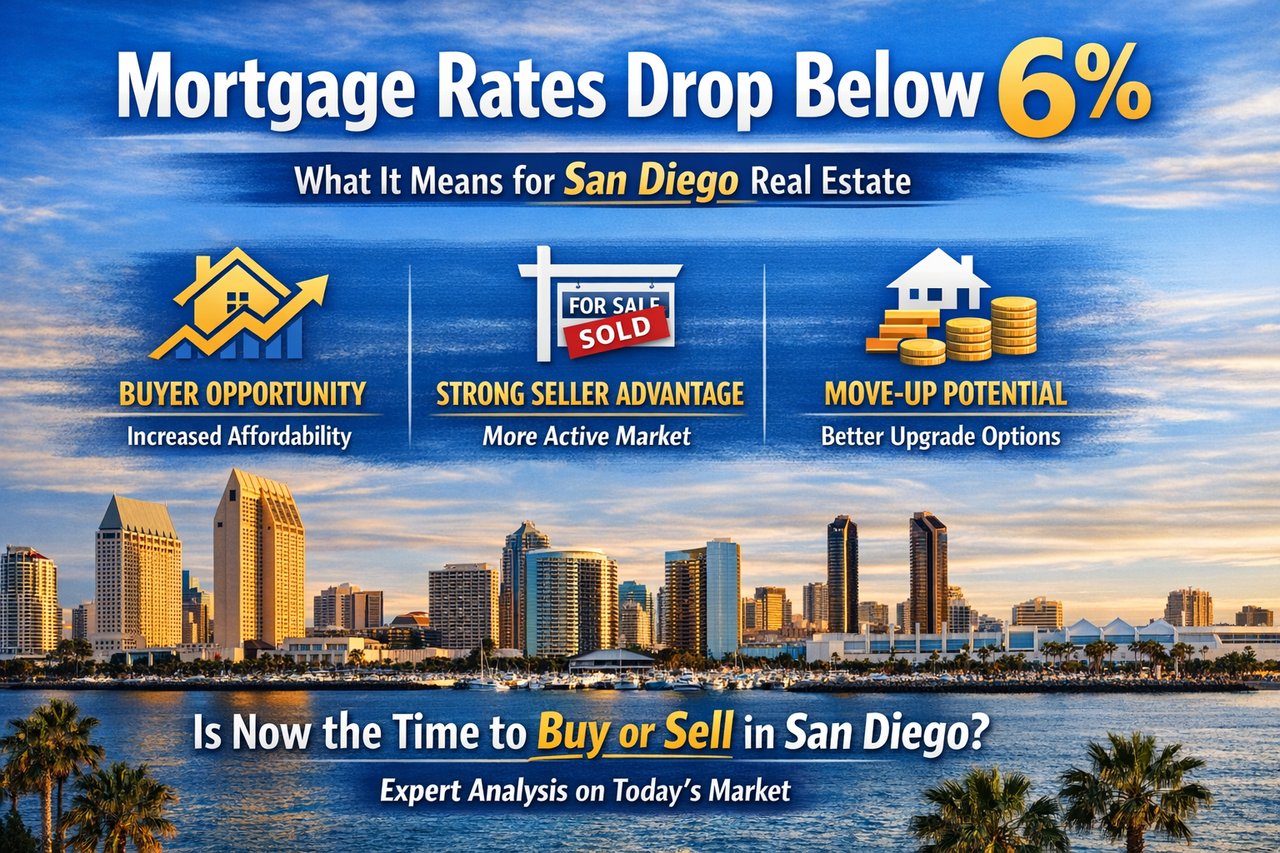
How Sub 6 Percent Interest Rates Are Reshaping Buyer Demand, Seller Leverage, and Home Prices Across San Diego

San Diego
What SB 326, special assessments, and non-warrantable buildings mean for condo owners — and how to still sell successfully

Market Updates
Discover the latest real estate trends in 92127—including Del Sur and Rancho Bernardo. Explore how listing prices, inventory, and market pace are shifting in 2025.
Experience the difference that exceptional service and results can make in your real estate journey. Chase is dedicated to providing personalized attention and expert guidance to each client, ensuring that your unique needs are met with the highest standards of professionalism.